

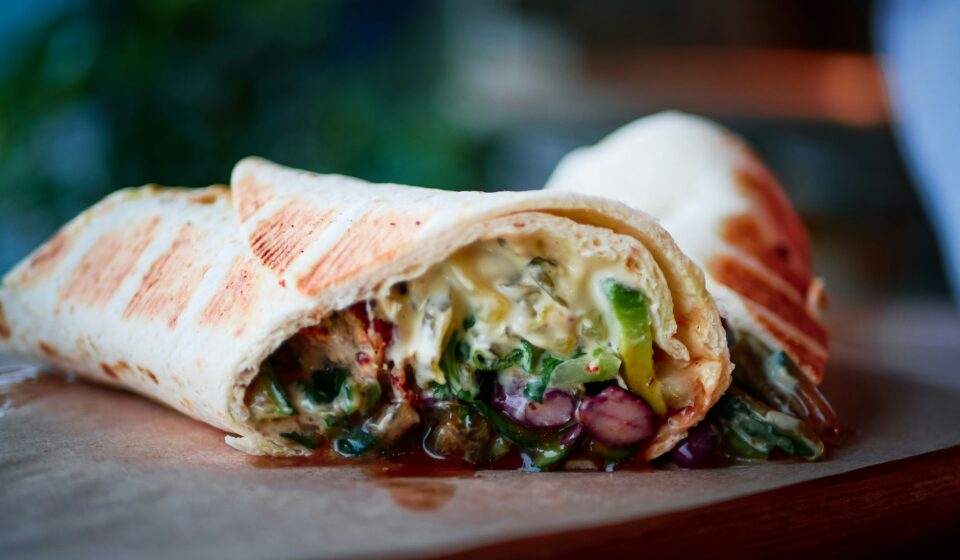

I run Spinning Grillers, and I get one question more than any other: “so where did shawarma actually come from?” Usually I give a short answer and get back to slicing meat. The honest answer takes longer than a lunch rush allows. So here’s the long version — the one I’d give you over a wrap instead of in line for one.
Table Of Content
Shawarma feels like it’s always existed. You’ll find it on every third corner in Beirut. Food trucks sell it in Manhattan. Stands in Berlin serve it at 2 a.m. after the bars close. But it didn’t appear fully formed. It’s the result of one good idea, refined over roughly two centuries, carried across borders by people who never set out to build a global food tradition. They were just feeding their families and their customers.
It Started Sideways
Long before anyone rotated meat vertically, cooks across the Middle East and the Mediterranean spit-roasted meat horizontally. They’d done this for a very long time. Picture a whole lamb, or a large cut, secured to a spit over glowing charcoal. Someone — a servant in a wealthy household, a family member at a village feast — turned it by hand for hours so every side cooked evenly. It was slow work. It was also genuinely excellent food. Fat rendered gradually and basted the meat as it went. Smoke added depth. Low, steady heat kept things tender. Weddings, harvests, and religious festivals often centered on these communal roasts.
The Turn That Changed Everything
The fix shows up in the historical record in nineteenth-century Bursa, a city in the Ottoman Empire, in what’s now Turkey. Most food historians credit a cook named Iskender Efendi. Like most culinary breakthroughs, he likely refined and popularized an idea several cooks were already circling. He flipped the spit upright.
It sounds like a small tweak. It wasn’t. Once the meat stack stood vertical, gravity became an ally instead of an obstacle. Fat from the top layers trickled down through the stack, basting everything beneath it and browning the surface into that deeply caramelized crust we now associate with a good döner or shawarma. The outer layer cooked first, so a cook could shave it off the moment it was ready while the rest kept roasting underneath. Nobody had to wait for an entire roast to finish before anyone got fed. One vertical spit could serve customers all day, off a single load of meat.
Iskender Efendi’s family still runs a restaurant in Bursa. They serve İskender Kebap — thin slices of döner over bread, doused in tomato sauce, melted butter, and yogurt. It’s worth trying if you’re ever there, if only to taste something close to where this whole story picks up speed.
One Empire, a Dozen Descendants
The Ottoman Empire spanned three continents for over six hundred years. It connected cities like Istanbul, Damascus, Cairo, Aleppo, and Thessaloniki through the constant movement of merchants, soldiers, and travelers. Food moved with them. When the empire dissolved after the First World War, new nations formed — Turkey, Lebanon, Syria, Jordan, Iraq, Greece, and others. They all kept cooking meat on a vertical spit. They just stopped cooking it the same way.
How the Levant Split Off
In Turkey, people call it döner kebab, from the verb dönmek — to turn. The seasoning stays fairly restrained, letting good lamb or beef speak for itself. You’ll find it served over rice, tucked into bread, or stacked İskender-style with tomato sauce and butter.
In Lebanon, garlic takes over. Toum — a dairy-free garlic sauce whipped into something like a light mayonnaise — is practically the signature. Chicken shawarma marinated in garlic and citrus is enormously popular. Parsley, pickled turnips, and fresh vegetables give the whole sandwich a brighter, herb-forward taste than most people expect.
Syria’s version, shaped by cities like Damascus and Aleppo, often adds pomegranate molasses or citrus to the marinade for a subtle tang under the smoke. Syrian cooks I’ve talked to insist the goal isn’t one dominant flavor. It’s balance.
Cross into Jordan or Palestine, and you’ll find shops that tuck french fries directly into the wrap. Spice blends here stay closely guarded family secrets — ask about one, and you’ll usually get a polite smile instead of an actual answer.
How It Traveled Even Further
Then there’s Greece, where the same rotating-spit idea produces gyros — pork or chicken, wrapped in thicker pita, served with tzatziki instead of garlic sauce or toum. The word gyros literally means “turn,” just like dönmek. Same ancestor, different sauce, different bread, different name.
Germany deserves its own mention too. Turkish workers migrated to West Germany starting in the 1960s under labor agreements, and they brought döner with them. Over the following decades, it evolved into something distinctly German: red cabbage, multiple sauces, crustier bread, bigger portions. Germany now sells millions of döner sandwiches every year. For a lot of younger Germans, it isn’t “foreign food.” It’s just lunch.
My favorite branch of the family tree ends up in Mexico. Lebanese immigrants who settled there in the late 1800s and early 1900s brought the vertical spit technique with them. Local cooks swapped lamb for pork and folded in Mexican chilies. Pita became corn tortillas. Somebody added pineapple. That’s tacos al pastor — one of Mexico’s most beloved street foods, and a direct descendant of that nineteenth-century Ottoman rotisserie, even though almost nobody eating one thinks about shawarma while they do.
What’s Actually Changed (and What Hasn’t)
Here’s the thing about the modern shawarma machine behind the counter at a place like mine: it does exactly what that first vertical spit in Bursa did. Layer marinated meat, apply steady heat from the side, let the fat baste its way down the stack, shave off the crust as it’s ready. That core process hasn’t moved an inch in over a hundred years.
The Machinery Caught Up
Everything around that core idea, though, has changed. Motor-driven rotisseries replaced charcoal and hand-cranked spits, keeping a constant, even rotation without anyone standing there turning a handle for hours. Gas burners and electric heating elements replaced open charcoal in most commercial kitchens, giving cooks far more control over temperature and far less risk of a flare-up scorching one side of the stack. Stainless steel construction and removable drip trays let restaurants meet food safety standards and stay clean, day after day, without shutting down for maintenance.
The Flavor Never Did
None of that machinery is really about flavor. It’s about consistency, and about running a kitchen that can handle a lunch line without falling apart. The taste still comes from the same place it always did: a good marinade — usually built around an acid like yogurt, lemon, or vinegar, plus a spice blend that differs in every family and every city — and fat rendering slowly through the stack as it cooks. The Maillard reaction browns the crust and produces most of that deep, roasted flavor. That chemical process happened in Bursa in the 1860s exactly the way it happens on a modern electric rotisserie today. Nobody back then knew the chemistry. They just knew it tasted right, and they kept doing it.