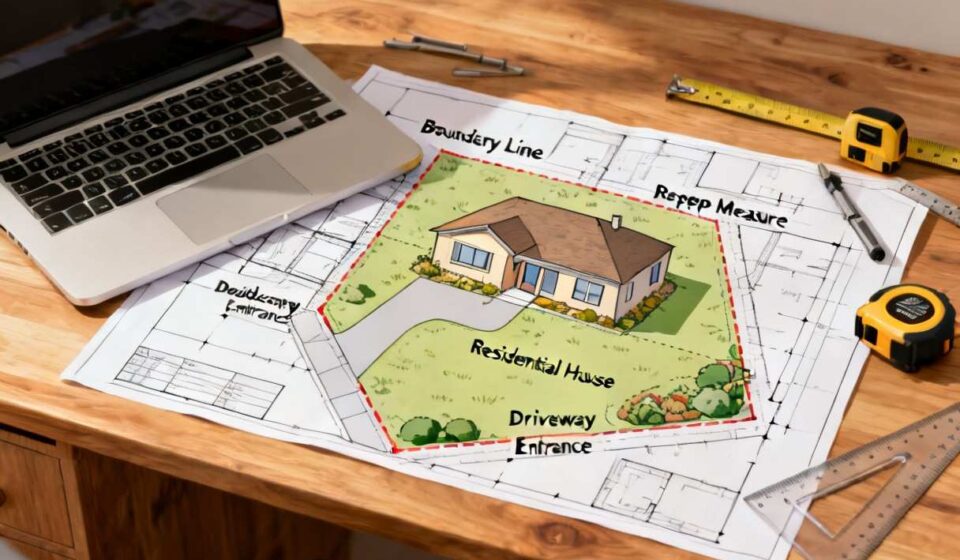
Planning a new construction project, home addition, garage, fence, or renovation often starts with one important document — the site plan. Many homeowners and first-time builders are surprised when local permit offices ask for one before approving a project.
If you are new to construction or permitting, understanding site plans can feel confusing at first. Terms like “plot plan,” “property survey,” and “permit drawings” are often used interchangeably, even though they are slightly different.
This beginner-friendly guide explains everything you need to know about site plans for permits, including the difference between a site plan vs plot plan, what information is included, and how to get a site plan quickly for your project.
What Is a Site Plan?
A site plan is a detailed drawing that shows the layout of a property and everything located on it. It provides a top-down view of the land, structures, and important measurements needed for planning and permitting.
A typical site plan includes:
Property boundaries
Existing buildings
Proposed new construction
Driveways and sidewalks
Utility lines
Fences
Landscaping features
Setbacks and distances
Easements
North direction indicator
Local building departments use site plans to verify that a project follows zoning rules, safety regulations, and property restrictions.
For example, if you are building a garage or room addition, the city wants to ensure the structure is not too close to property lines or utility easements. A professional site plan helps confirm compliance before construction begins.
Why Site Plans Are Required for Permits
Most municipalities require site plans for permits because they provide a clear overview of how a project fits within the property.
Permit reviewers use them to check:
Zoning Compliance
Cities and counties have setback requirements that determine how far structures must be from property boundaries.
Building Placement
Officials verify that proposed structures will not interfere with neighboring properties, roads, or utilities.
Drainage and Safety
Some projects affect water drainage, grading, or emergency access. A site plan helps identify potential issues.
Utility Coordination
Permit offices may need to confirm locations of sewer, water, gas, and electrical connections.
Without accurate site plans for permits, approval delays are common. Incomplete or unclear drawings often result in revision requests from local authorities.
Site Plan vs Plot Plan: What’s the Difference?
One of the most common questions homeowners ask is about the difference between a site plan vs plot plan.
Although the terms are sometimes used interchangeably, there are subtle differences.
Plot Plan
A plot plan usually focuses on the existing property layout. It commonly includes:
Property lines
Existing structures
Driveways
Easements
Utility locations
Plot plans are often simpler and may come from property surveys or county records.
Site Plan
A site plan is more detailed and typically includes proposed improvements or construction changes.
It may show:
New additions
Proposed garages or sheds
Landscaping updates
Parking layouts
Drainage changes
Construction dimensions
In many residential permit applications, cities may accept either document depending on the project scope. However, larger or more detailed projects usually require a professional site plan.
Understanding the distinction between a site plan vs plot plan helps homeowners request the correct documents and avoid unnecessary delays.
What Information Should a Site Plan Include?
A complete site plan should contain accurate measurements and clearly labeled features. While requirements vary by city, most permit offices expect the following information.
Property Boundaries
Clearly marked lot lines with dimensions.
Existing Structures
All current buildings, garages, patios, decks, and sheds.
Proposed Construction
New additions or structures with exact measurements and distances from property lines.
Setbacks
Required spacing between structures and lot boundaries.
Easements
Utility or access areas where construction restrictions may apply.
North Arrow
Indicates orientation and direction.
Scale Measurements
The drawing should use a standard engineering or architectural scale.
Driveways and Access Points
Vehicle entrances, sidewalks, and parking areas.
Utility Information
Locations of water, sewer, gas, and electrical systems if required.
Providing accurate details is extremely important because even small measurement errors can create permit complications later.
How to Get a Site Plan for Your Property
If you are wondering how to get a site plan, there are several options available depending on your project needs and budget.
1. Check Existing Property Documents
Sometimes your property closing paperwork includes:
Plot plans
Surveys
Builder drawings
Mortgage inspection reports
These documents can serve as a starting point.
2. Contact Your Local Municipality
Some counties and cities maintain parcel maps or basic property layouts online. While these may not always meet permit requirements, they can help gather information.
3. Hire a Professional Site Plan Service
For accurate and permit-ready drawings, many homeowners choose professional drafting services.
A professional can create:
Residential site plans
Permit-ready drawings
Plot plans
Construction layouts
As-built site plans
This option is especially helpful for additions, ADUs, garages, decks, pools, and commercial projects.
4. Use a Licensed Surveyor
If exact property boundaries are unclear, a land surveyor may be necessary. Surveys are often recommended when:
Boundary disputes exist
The property is irregularly shaped
Existing records are outdated
Major construction is planned
Combining a survey with a professional site plan helps ensure accuracy and smoother permit approval.
Common Projects That Need Site Plans
Many homeowners are surprised by how many projects require permit drawings and site layouts.
Common examples include:
Home additions
Detached garages
Decks and patios
Swimming pools
ADUs (Accessory Dwelling Units)
New homes
Fences
Driveway expansions
Solar panel installations
Commercial renovations
Even smaller projects may require site plans for permits depending on local regulations.
Before beginning construction, always check with your local building department to confirm requirements.
Benefits of Professional Site Plans
Professional site plans provide more than just permit approval support. They also improve project organization and planning accuracy.
Benefits include:
Faster permit processing
Reduced revision requests
Better construction planning
Accurate property measurements
Improved communication with contractors
Clear zoning compliance documentation
For homeowners, builders, and contractors, investing in a reliable site plan often saves time and money during construction.
Final Thoughts
Understanding site plans is an important first step for any construction or renovation project. Whether you are building a new home, adding a garage, or installing a pool, accurate drawings help ensure your project meets local requirements and moves smoothly through the permit process.
Knowing the difference between a site plan vs plot plan also helps homeowners choose the right documents for their project needs.
If you need site plans for permits, working with experienced professionals can simplify the process and reduce approval delays. When done correctly, a site plan becomes the foundation for a successful and compliant build.
Whether you are planning a small residential upgrade or a larger development project, taking the time to get a site plan prepared properly can make the entire construction process much easier.