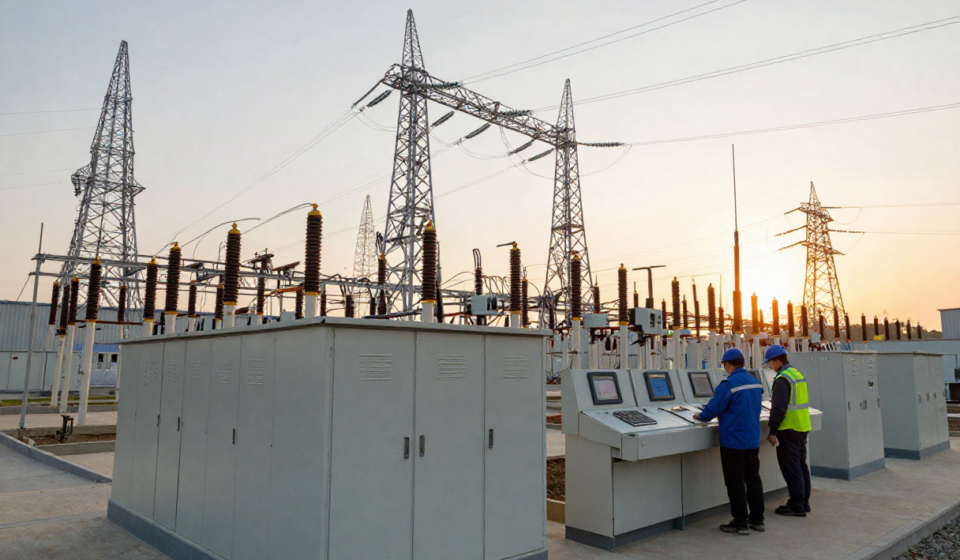

The energy sector is undergoing a major transformation, and substations are at the heart of this change. Traditionally viewed as static infrastructure, substations are now becoming intelligent, adaptive systems powered by digital innovation. Modern electrical substation design is no longer just about connecting and distributing power—it’s about creating smarter, safer, and more efficient energy networks.
Table Of Content
With advancements in automation, IoT, and data analytics, substation engineering design is evolving rapidly. Engineers and planners must now integrate digital intelligence alongside traditional physical infrastructure. Let’s explore how smart technology is reshaping substation design and what it means for the future.
1. From Conventional to Smart Substations
Conventional substations relied heavily on manual monitoring, physical inspections, and analog systems. While these designs served their purpose, they often lacked real-time responsiveness and predictive capabilities.
Smart substations, on the other hand, incorporate digital sensors, intelligent electronic devices (IEDs), and communication networks. These components enable real-time data collection and automated decision-making. In modern substation engineering design, this shift allows operators to monitor equipment health, detect faults instantly, and respond proactively rather than reactively.
The result is a more resilient power system that reduces downtime and enhances operational efficiency.
2. Integration of IoT and Real-Time Monitoring
One of the biggest drivers of change in electrical substation design is the integration of the Internet of Things (IoT). Sensors installed across transformers, circuit breakers, and other equipment continuously gather data such as temperature, load, and vibration.
This real-time monitoring provides engineers with valuable insights into system performance. Instead of relying on periodic maintenance schedules, utilities can adopt condition-based maintenance strategies. This not only reduces operational costs but also extends the lifespan of critical equipment.
In modern substation civil engineering design, provisions must be made for sensor placement, communication infrastructure, and secure data transmission systems—making digital planning just as important as structural planning.
3. Automation and Remote Control Capabilities
Automation is transforming how substations operate. Smart substations use advanced control systems that can automatically isolate faults, reroute power, and restore service without human intervention.
Remote control capabilities are another key advancement. Operators can manage substations from centralized control rooms, eliminating the need for constant on-site personnel. This is especially valuable in remote or hazardous locations.
For engineers, this means substation engineering design must now include robust communication networks, cybersecurity measures, and fail-safe automation systems. The focus is shifting from purely physical layouts to integrated cyber-physical systems.
4. Digital Twins and Predictive Maintenance
A major innovation in electrical substation design is the use of digital twins—virtual replicas of physical substations. These digital models simulate real-world conditions and allow engineers to test scenarios, predict failures, and optimize performance.
Predictive maintenance is a game-changer. By analyzing historical and real-time data, smart systems can identify potential issues before they lead to equipment failure. This reduces unexpected outages and maintenance costs.
Incorporating digital twin technology requires careful planning during the substation civil engineering design phase, ensuring that all physical assets are digitally mapped and integrated into the system.
5. Enhanced Safety and Cybersecurity
As substations become more connected, safety extends beyond physical hazards to include digital threats. Smart substations must be designed with strong cybersecurity frameworks to protect against data breaches and cyberattacks.
At the same time, automation reduces human exposure to high-voltage environments, improving overall safety. Advanced monitoring systems can detect abnormal conditions and trigger immediate shutdowns when necessary.
Modern substation engineering design must balance accessibility with security—ensuring systems are easy to operate but difficult to compromise.
6. Sustainable and Future-Ready Infrastructure
Sustainability is another critical factor driving innovation in electrical substation design. Smart substations are designed to integrate renewable energy sources such as solar and wind, which often have variable outputs.
Energy storage systems, smart grid compatibility, and efficient power management are now essential components. Engineers must design substations that can handle fluctuating loads while maintaining stability.
In substation civil engineering design, this means optimizing land use, reducing environmental impact, and incorporating eco-friendly materials. Future-ready substations are flexible, scalable, and capable of adapting to evolving energy demands.
Conclusion
The evolution of substation design is a clear reflection of the broader digital transformation in the energy sector. Smart technology is not just enhancing performance—it is redefining the very purpose of substations.
Today’s electrical substation design goes beyond traditional boundaries, integrating intelligence, automation, and sustainability. From IoT-enabled monitoring to digital twins and cybersecurity, every aspect of substation engineering design is becoming more advanced and interconnected.
For businesses like Keentel Engineering, staying ahead means embracing these innovations and delivering solutions that are not only efficient but also future-ready. As the demand for reliable and sustainable energy grows, smart substations will play a crucial role in powering the world forward.