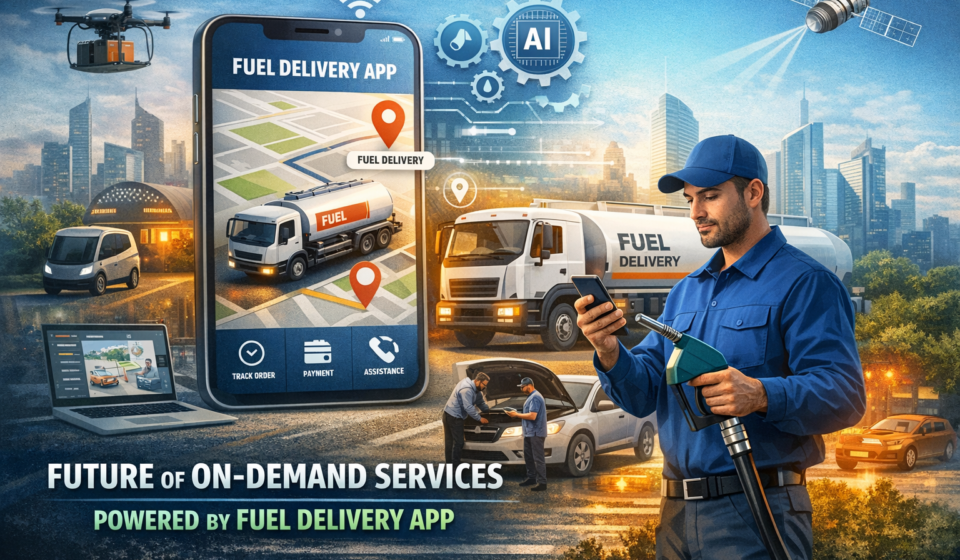

The on-demand economy continues to reshape how consumers access essential services, with convenience and immediacy becoming primary expectations. Among emerging innovations, fuel delivery solutions are gaining traction as a practical response to time constraints, urban congestion, and evolving mobility needs. Businesses are exploring new digital models to meet this demand while ensuring safety, compliance, and efficiency. As technology advances, the integration of logistics, mobile applications, and real-time tracking is redefining how fuel reaches end users, making this segment a significant component of the broader on-demand service ecosystem.
Table Of Content
- Evolution of on-demand services in digital ecosystems
- Market demand driving fuel delivery platform innovation
- Core features shaping modern fuel delivery applications
- Role of IoT and AI in fuel delivery service expansion
- Regulatory and safety considerations in fuel logistics
- Integration with mobility and fleet management systems
- Cost factors influencing fuel delivery app development
- Opportunities in roadside assistance and hybrid services
- Future trends shaping fuel delivery and logistics models
- Conclusion
Evolution of on-demand services in digital ecosystems
On-demand services have evolved from basic convenience offerings to highly sophisticated platforms driven by real-time data and automation. Initially dominated by food delivery and ride-hailing, the sector has expanded into areas such as healthcare, logistics, and fuel distribution.
Several factors have fueled this evolution:
- Increased smartphone penetration
- Improved GPS and mapping technologies
- Secure digital payment systems
- Demand for time-saving solutions
Fuel delivery fits naturally into this ecosystem, addressing a universal need while leveraging existing infrastructure. Unlike traditional refueling methods, on-demand fuel services eliminate detours and waiting times, offering a seamless user experience.
Market demand driving fuel delivery platform innovation
The demand for fuel delivery services is largely driven by urbanization and changing consumer behavior. As cities become more congested, the need for efficient alternatives to traditional refueling grows.
Key demand drivers include:
- Busy lifestyles reducing time for routine tasks
- Growth of fleet-based businesses requiring bulk fuel access
- Increased focus on operational efficiency
- Rising adoption of digital-first services
Businesses entering this space often collaborate with a Fuel Delivery App Development Company to build scalable and compliant platforms. These companies play a critical role in ensuring that applications meet both technical and regulatory requirements.
Core features shaping modern fuel delivery applications
Modern fuel delivery applications rely on a combination of user-centric design and backend efficiency. The effectiveness of such platforms depends on how well they integrate logistics, safety, and user experience.
Essential features include:
- Real-time location tracking for delivery vehicles
- Automated scheduling and route optimization
- Secure digital payments and invoicing
- User dashboards with order history and analytics
- Emergency request functionality
Advanced platforms also incorporate predictive analytics to forecast demand and optimize inventory. This reduces operational costs and improves service reliability.
Role of IoT and AI in fuel delivery service expansion
Emerging technologies such as the Internet of Things and artificial intelligence are transforming fuel delivery operations. These technologies enhance efficiency, safety, and decision-making capabilities.
Applications of IoT and AI include:
- Smart sensors for monitoring fuel levels and quality
- AI-driven route optimization to reduce delivery time
- Predictive maintenance for delivery vehicles
- Automated compliance tracking and reporting
These innovations enable businesses to scale operations while maintaining high service standards. As technology adoption increases, the role of a Fuel Delivery App Development Company becomes more strategic in integrating these advanced capabilities.
Regulatory and safety considerations in fuel logistics
Fuel delivery is a highly regulated industry due to safety and environmental concerns. Compliance with local and international regulations is critical for operational success.
Key considerations include:
- Licensing requirements for fuel transportation
- Safety protocols for storage and handling
- Environmental compliance standards
- Real-time monitoring of delivery operations
Applications must be designed to incorporate these requirements seamlessly. Features such as digital documentation, compliance alerts, and incident reporting systems are essential components of a reliable platform.
Integration with mobility and fleet management systems
Fuel delivery services are increasingly integrated with broader mobility ecosystems, particularly fleet management platforms. This integration enhances efficiency and provides additional value to businesses.
Benefits of integration include:
- Automated fuel scheduling based on vehicle usage
- Centralized fleet monitoring and analytics
- Reduced downtime through proactive refueling
- Cost optimization through data-driven insights
Such integrations highlight the overlap with pickup and delivery app development, where logistics optimization plays a central role. The convergence of these systems is shaping the future of transportation and service delivery.
Cost factors influencing fuel delivery app development
Understanding the cost to build fuel delivery app solutions requires a detailed analysis of various components. Development costs can vary significantly based on features, technology stack, and compliance requirements.
Primary cost factors include:
- Application complexity and feature set
- Integration with third-party services and APIs
- Security and compliance implementation
- Development team expertise and location
- Maintenance and scalability considerations
Businesses often engage a Fuel Delivery App Development Company to navigate these complexities and ensure cost-effective development without compromising quality or compliance.
Opportunities in roadside assistance and hybrid services
Fuel delivery platforms are increasingly expanding into complementary services, creating hybrid solutions that address multiple user needs. One such area is Roadside Assistance App development, which aligns closely with fuel delivery.
Combined service offerings may include:
- Emergency fuel delivery
- Battery jump-start services
- Tire repair and replacement
- Vehicle diagnostics and support
This diversification enhances user value and opens new revenue streams for service providers. It also strengthens customer retention by offering comprehensive mobility solutions within a single platform.
Future trends shaping fuel delivery and logistics models
The future of fuel delivery services will be influenced by technological advancements, environmental considerations, and evolving consumer expectations. Several trends are expected to shape the industry:
- Transition toward electric and alternative fuel delivery models
- Increased automation through autonomous delivery vehicles
- Expansion of subscription-based service models
- Greater emphasis on sustainability and carbon reduction
As these trends unfold, the role of digital platforms will become even more critical. Businesses must focus on adaptability and innovation to remain competitive in this dynamic landscape.
Conclusion
The transformation of on-demand services continues to redefine how essential resources are accessed and delivered. Fuel delivery platforms represent a significant advancement in convenience, efficiency, and technological integration. By leveraging innovations such as IoT, artificial intelligence, and advanced logistics systems, these services are positioned to play a central role in future mobility ecosystems. As regulatory frameworks evolve and consumer expectations rise, the industry will continue to innovate, offering more comprehensive and sustainable solutions that align with the broader goals of modern urban living.