
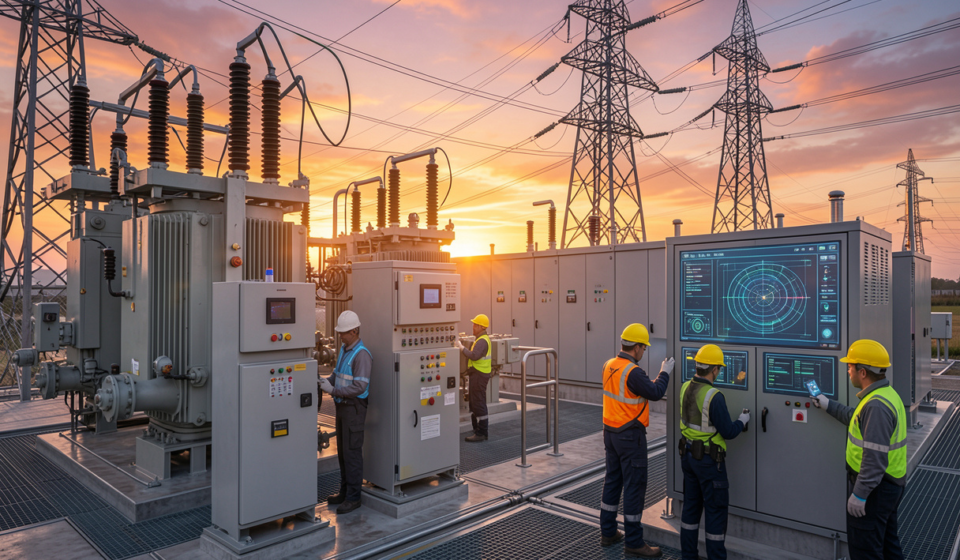

Modern electrical networks depend heavily on substations to ensure reliable transmission and distribution of electricity. As power demand continues to grow and renewable energy integration increases, utilities and industries require substations that are not only efficient but also safe, scalable, and easy to maintain.
Table Of Content
- Understanding the Importance of Modern Substation Design
- Selecting the Right Substation Layout
- Prioritizing Safety in Every Design Stage
- The Role of Automation and SCADA Systems
- Designing for Energy Efficiency and Reliability
- The Advantages of a Design-Build Approach
- Planning for Future Expansion and Sustainability
- Conclusion
A well-planned substation improves operational reliability, reduces outages, enhances worker safety, and supports future expansion. Whether developing a new facility or upgrading an existing one, following industry best practices helps create long-lasting and high-performing infrastructure.
This guide explores the key elements involved in designing modern substations while focusing on efficiency, safety, automation, and long-term operational success.
Understanding the Importance of Modern Substation Design
Substations serve as critical nodes within electrical networks. They regulate voltage levels, control power flow, and protect equipment from faults and disturbances. Poorly designed substations can lead to power instability, equipment failure, high maintenance costs, and safety risks.
Today’s utilities and industrial facilities require systems that can handle increasing electrical loads while maintaining operational reliability. This is where effective power substation design becomes essential. Engineers must balance performance, safety, cost-efficiency, and future adaptability during every phase of development.
A successful design starts with a detailed assessment of system requirements, environmental conditions, load demand, and regulatory standards.
Selecting the Right Substation Layout
The layout of a substation has a major impact on operational efficiency and maintenance accessibility. Proper equipment placement improves reliability while minimizing operational risks.
Engineers typically evaluate several factors before finalizing a layout, including:
- Available land area
- Voltage level requirements
- Future expansion capability
- Environmental conditions
- Safety clearances
- Maintenance accessibility
An optimized layout allows smooth power flow while reducing cable lengths, transmission losses, and installation complexity. Clear separation between high-voltage equipment and operational areas also enhances worker safety.
Modern substations increasingly use compact and modular layouts to reduce land usage and construction costs. Gas-insulated substations, for example, are often selected in urban or space-constrained locations because of their compact footprint and high reliability.
Prioritizing Safety in Every Design Stage
Safety is one of the most important aspects of substation engineering. Electrical substations contain high-voltage equipment capable of causing serious hazards if not properly designed and maintained.
A strong safety-focused approach includes proper grounding systems, fault protection, insulation coordination, and fire protection planning. Grounding systems are particularly important because they protect personnel and equipment from dangerous fault currents and voltage surges.
Designers must also ensure compliance with international standards and utility regulations. Adequate clearance distances, fencing, warning systems, and emergency shutdown procedures should always be integrated into the design.
Arc flash analysis and protection coordination studies are essential for identifying potential hazards and minimizing risks during operation and maintenance activities. These studies help engineers determine the safest equipment ratings and protective device settings.
Reliable safety planning not only protects workers but also improves the long-term reliability of the entire electrical network.
The Role of Automation and SCADA Systems
Digital transformation is rapidly changing the way substations operate. Modern automation technologies help utilities monitor performance, reduce downtime, and improve operational efficiency.
A properly integrated substation scada system enables real-time monitoring and remote control of critical equipment. Operators can quickly identify faults, monitor voltage conditions, analyze system data, and respond to emergencies without being physically present at the site.
SCADA integration provides several major benefits, including:
- Faster fault detection
- Improved operational visibility
- Reduced maintenance costs
- Enhanced grid reliability
- Better energy management
- Remote troubleshooting capabilities
Intelligent electronic devices (IEDs), sensors, and communication networks now play a central role in substation automation. These technologies improve system responsiveness and support predictive maintenance strategies that help prevent unexpected failures.
Cybersecurity has also become increasingly important as substations become more connected. Modern systems must include secure communication protocols and network protection measures to safeguard critical infrastructure from cyber threats.
Designing for Energy Efficiency and Reliability
Efficient substations help reduce operational costs and improve overall grid performance. Engineers achieve this through careful equipment selection, optimized electrical configurations, and advanced monitoring systems.
Transformers, switchgear, and conductors should be selected based on expected load conditions, environmental factors, and future growth requirements. Energy-efficient transformers and low-loss conductors can significantly reduce power losses over time.
Thermal management is another important consideration. Proper ventilation, cooling systems, and equipment spacing prevent overheating and extend equipment lifespan.
Reliability can also be improved through redundancy planning. Backup transformers, duplicate protection systems, and multiple power paths help maintain service continuity during faults or maintenance activities.
Incorporating renewable energy sources into substations requires additional planning. Solar farms, wind power facilities, and battery storage systems introduce variable power conditions that must be managed carefully to maintain grid stability.
Engineers increasingly use advanced simulation and power system studies to evaluate network performance before construction begins. These studies help identify potential weaknesses and optimize overall system efficiency.
The Advantages of a Design-Build Approach
Many utilities and industrial clients now prefer the substation design build approach because it streamlines project execution and improves coordination between engineering and construction teams.
In a traditional project structure, design and construction are often handled separately, which can lead to delays, communication issues, and cost overruns. A design-build model combines both phases under a single project team, improving efficiency and accountability.
Some of the major advantages include:
- Faster project delivery
- Better cost control
- Improved communication
- Reduced design conflicts
- Higher construction efficiency
- Simplified project management
Collaboration between engineers, contractors, and equipment suppliers from the beginning of the project helps ensure smoother execution and better technical outcomes.
This approach is especially valuable for complex substations where timelines, budget control, and system reliability are critical.
Planning for Future Expansion and Sustainability
Electrical infrastructure must be designed with future growth in mind. Energy demand, renewable integration, and grid modernization initiatives continue to evolve, making scalability a critical consideration.
Flexible substation designs allow additional feeders, transformers, and automation systems to be added without major reconstruction. Reserving space for future equipment can significantly reduce upgrade costs later.
Sustainability is also becoming an important focus in substation engineering. Utilities are adopting environmentally responsible solutions such as energy-efficient equipment, eco-friendly insulating materials, and reduced-emission technologies.
Digital monitoring systems further support sustainability goals by improving asset management and reducing unnecessary maintenance activities.
Future-ready substations combine efficiency, reliability, automation, and environmental responsibility to support long-term grid performance.
Conclusion
Efficient and safe substation design plays a vital role in maintaining reliable electrical infrastructure. From equipment selection and safety planning to automation and future scalability, every design decision directly impacts operational performance and system reliability.
Modern substations must support growing power demands while maintaining high safety standards and operational efficiency. By following industry best practices, utilities and industrial facilities can create substations that are reliable, adaptable, and prepared for future energy challenges.
As technology continues to evolve, smart engineering approaches, automation systems, and integrated project delivery methods will remain essential for building resilient and high-performing power networks.