

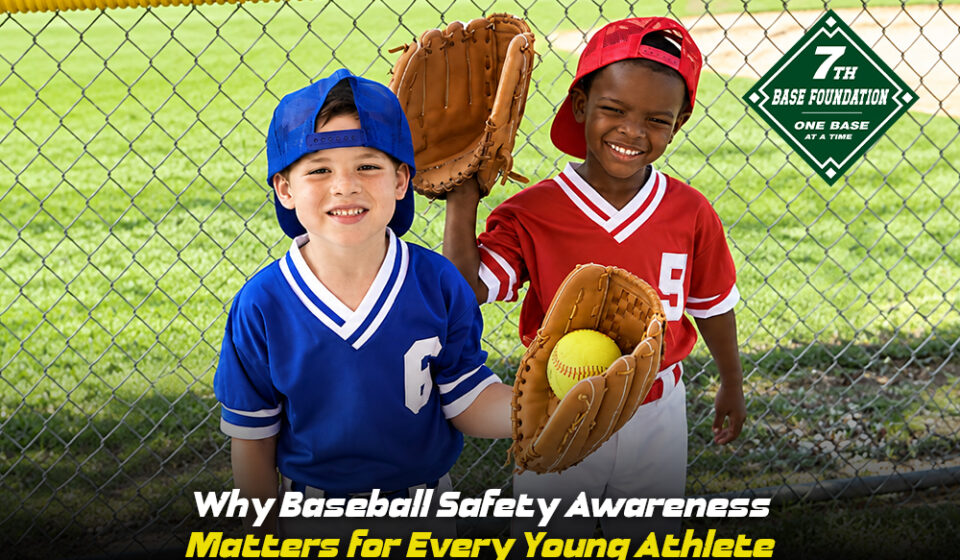

We teach young ballplayers to read a pitcher’s motion, to call for fly balls, to know the count. We drill the skills of the game into them season after season. Yet the one skill that follows them off the field and into the rest of their lives, understanding how to stay safe in their own sport, is usually taught in fragments, if it is taught at all.
Table Of Content
- Aware Players Understand Where Injuries Actually Come From
- Awareness Teaches Kids to Speak Up, About Fields and About Bodies
- Speaking Up About the Field
- Speaking Up About Themselves
- Awareness Without Fear: Getting the Balance Right
- The Adults Set the Temperature
- From Awareness to a Safer Game for Everyone
- A Simple Awareness Checklist Young Players Can Own
- Help Every Young Athlete Play Aware and Protected
Safety awareness is not fear, and it is not a lecture. It is a player who understands their sport well enough to know where its risks live and confident enough to do something about them. Every young athlete deserves that understanding, and here is why it matters so much.
Aware Players Understand Where Injuries Actually Come From
Ask most kids where baseball hurts people and they will say getting hit by a pitch. The real injury map looks different. A large share of youth baseball and softball injuries happen on the base paths, where sliding players collide with traditional stationary bases that cannot yield, driving injury-level force into ankles, knees, hands, and wrists.
A player who knows this thinks about the bases differently. They take sliding instruction seriously instead of treating it as a boring drill. They notice whether a base sits firm or wobbles loose. And when they see a field equipped with breakaway bases, engineered to release under the force that causes injuries, they understand they are looking at protection, not decoration. Knowledge turns equipment from background scenery into something a young athlete can actually appreciate and ask for.
Awareness Teaches Kids to Speak Up, About Fields and About Bodies
Speaking Up About the Field
Young athletes see things adults miss. They are the ones whose cleats catch the lip in the base path, who feel the base shift on a hard slide, who notice the gap in the fence by the dugout. A culture of safety awareness gives them permission, and language, to say so: “Coach, second base feels loose” is a sentence that prevents injuries, but only if kids have learned that saying it is welcome, not whiny.
Speaking Up About Themselves
The same voice matters for their own bodies. Kids hide pain; they hide it to stay in the lineup, to look tough, to not disappoint anyone. An aware athlete has been taught the opposite lesson: reporting a rolled ankle or a sore arm early is what strong players do, because small problems treated early stay small. That single habit, honest reporting, may prevent more long-term damage than any piece of equipment ever made.
Awareness Without Fear: Getting the Balance Right
There is a wrong way to teach all this, and every parent knows it instinctively: the version where a child learns their sport is dangerous and starts playing hesitantly, or stops playing at all. Fear is not awareness. Fear makes players tense, and tense players get hurt more, not less.
Real safety awareness runs the other direction. It says: this game is worth playing hard, and here is what makes it safe to do exactly that. Slide with proper technique, because good technique protects you. Trust breakaway bases, because they are engineered to give before you do. Speak up about hazards, because that is how teammates take care of each other. Kids taught this way play looser and more aggressively, not less, because confidence is what safety awareness actually produces. The child who trusts the field beneath them is the one who plays the game the way it was meant to be played.
The Adults Set the Temperature
Every young athlete’s safety awareness is borrowed, at first, from the adults around them. Coaches who make sliding instruction real, who thank the kid who reports a loose base instead of waving it off, teach more in one moment than a season of posters. Parents who ask their league what is on the fields, and who treat “what are our bases?” as a normal registration question, make safety an ordinary topic instead of a crisis one.
And leagues that act, by assessing their fields and installing proven safety equipment, teach the deepest lesson of all: that the adults here take your body seriously. Children absorb that message, or its absence, with perfect accuracy.
From Awareness to a Safer Game for Everyone
Here is what makes youth safety awareness bigger than any one player. Aware kids become aware teammates, then aware captains, then, sooner than seems possible, the coaches, umpires, board members, and parents running the next generation of the game. The nine-year-old who learns why breakaway bases matter becomes the adult who makes sure her daughter’s league has them.
That is the long game the Seventh Base Foundation is playing. Funding Rogers® Breakaway™ Bases for leagues that cannot afford them removes the hazard today; building awareness around why removes it for good. Every young athlete deserves both: a field built to protect them, and the understanding to carry that standard wherever they play next.
A Simple Awareness Checklist Young Players Can Own
Awareness sticks best when it is small enough to remember. Coaches and parents can hand young athletes a checklist like this one and make it theirs:
- Know your slide: practice proper technique until it is automatic, and never slide headfirst into a fixed base.
- Look at the field: before games, glance at the bases, base paths, and fences, and tell a coach about anything loose, lipped, or broken.
- Report pain early: a sore ankle mentioned today is a sprain avoided next week; hiding hurts is not toughness.
- Watch out for teammates: if you see a hazard or see a friend playing hurt, speak up for them too.
- Know your equipment: learn what breakaway bases are and why fields have them, so you can tell protection from decoration.
Five habits, none of them complicated, all of them portable to every field a child will ever play on. That is what awareness looks like when it is taught as a skill instead of a warning.
Help Every Young Athlete Play Aware and Protected
The Seventh Base Foundation is a 501(c)(3) nonprofit with one mission: preventing youth baseball and softball injuries by putting Rogers® Breakaway™ Bases on fields where kids actually play. You can make a donation, become a volunteer, or learn more about the equipment behind the mission at seventhbasefoundation.org. Every base funded is an injury that never has to happen.