
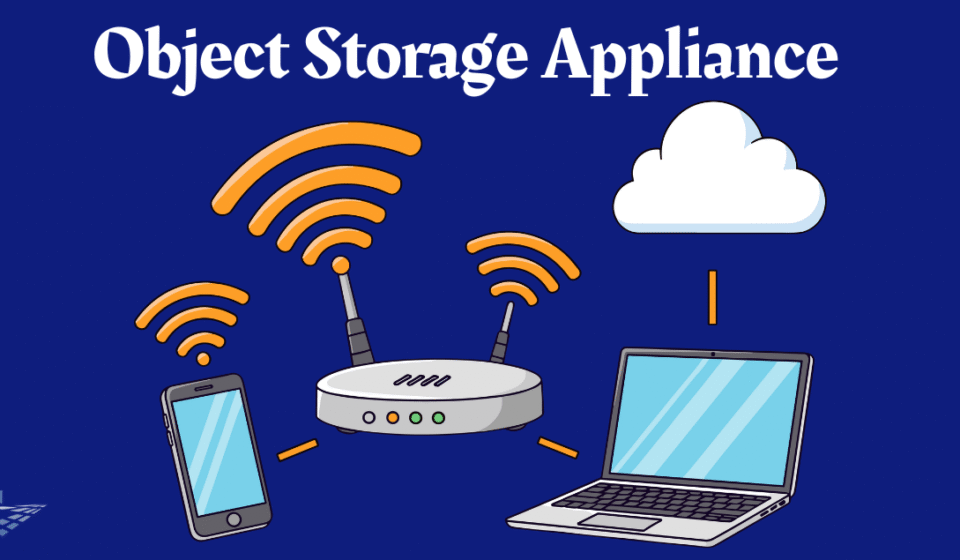

Simplify Your Data Center with an Storage Platform
Managing exponential data growth can quickly become a major headache for IT departments. The complexity of integrating servers, networking, and software often leads to spiraling costs and operational bottlenecks. To combat this, many are turning to a streamlined, all-in-one solution: the Object Storage Appliance. This approach packages the power of scalable object storage into a single, easy-to-deploy physical unit, offering a turnkey path to modernizing data infrastructure and simplifying management.
Table Of Content
- The Challenge of Build-Your-Own Infrastructure
- The Appliance Model: Simplicity and Power Combine
- What Is an Integrated Storage Platform?
- Key Benefits of the Appliance Approach
- Conclusion
- FAQs
- 1. Does using an appliance mean I lose flexibility?
- 2. Is an appliance more expensive than a software-only solution?
- 3. Can an appliance be use for hybrid cloud strategies?
- 4. What kind of workloads are best suit for a storage appliance?
- 5. How is data protected on an appliance-base cluster?
The Challenge of Build-Your-Own Infrastructure
For years, the standard approach to deploying new storage was to piece together components from various vendors. This involved selecting servers, networking switches, and storage software, then dedicating significant time and resources to integrating, testing, and validating the entire stack. While this “do-it-yourself” (DIY) method offers flexibility, it comes with considerable downsides.
- Integration Headaches: Ensuring compatibility between different hardware and software versions can be a persistent challenge, leading to lengthy deployment cycles.
- Complex Lifecycle Management: Every component has its own update and patching schedule, creating a complex maintenance burden for IT teams.
- Unpredictable Performance: Without pre-validation, it can be difficult to guarantee that the assembled system will meet performance expectations under real-world loads.
- Support Finger-Pointing: When issues arise, multiple vendors may be involve, leading to frustrating and time-consuming support calls where each party blames another.
These challenges drain valuable IT resources that could better spent on strategic initiatives.
The Appliance Model: Simplicity and Power Combine
An appliance-based model offers a compelling alternative by delivering a pre-integrated, pre-validated system. The hardware and software are designe and test to work together seamlessly, eliminating the guesswork and complexity of a DIY build.
What Is an Integrated Storage Platform?
Think of an Object Storage Appliance as a “data center in a box.” It’s a physical hardware unit that comes pre-loaded with all the necessary software to create a powerful, scalable object storage cluster. You simply rack the appliance, connect it to your network, and go through a simplified setup process. This plug-and-play approach drastically reduces the time to value, allowing you to have a production-ready storage system up and running in hours or days, not weeks or months.
Key Benefits of the Appliance Approach
Choosing a fully integrated solution provides several distinct advantages for businesses looking to modernize their data management strategy.
- Rapid Deployment: By removing the need for complex system integration and testing, you can deploy new storage capacity quickly to meet urgent business demands.
- Simplified Management: The entire stack, from hardware to software, is managed through a single interface. Firmware updates, software patches, and system monitoring are unified, reducing the operational burden on your team.
- Guaranteed Performance: Because the hardware and software are co-engineered, the vendor can provide predictable performance profiles. You can be confident that the system will deliver the throughput and availability required for your specific workloads.
- Single Point of Support: When you need assistance, there’s only one number to call. A single vendor is responsible for the entire Solution, leading to faster problem resolution and greater peace of mind.
The simplicity and reliability of an Object Storage Appliance make it an ideal choice for organizations of all sizes, from enterprises looking to simplify remote office deployments to mid-sized businesses seeking an enterprise-grade solution without the complexity.
Conclusion
The pressure to manage more data with fewer resources is a reality for modern IT. The appliance model for object storage directly addresses this challenge by delivering a powerful, scalable solution in a simple, easy-to-manage package. Managing exponential data growth can quickly become a major headache for IT departments. The complexity of integrating servers, networking, and software often leads to spiraling costs and operational bottlenecks. To combat this, many are turning to a streamlined, all-in-one solution: the Object Storage Appliance. This approach packages the power of scalable object storage into a single, easy-to-deploy physical unit, offering a turnkey path to modernizing data infrastructure and simplifying management.
By trading the complexity of DIY integration for the speed and reliability of a pre-engineered platform, organizations can accelerate their data center modernization projects, reduce operational overhead, and free up their IT teams to focus on driving business value. It represents a practical and efficient way to harness the power of modern storage.
FAQs
1. Does using an appliance mean I lose flexibility?
While you are buying a pre-integrated system, these appliances are typically designed to be highly scalable. You can easily add more appliances to your cluster to grow capacity and performance linearly as your needs evolve.
2. Is an appliance more expensive than a software-only solution?
The initial purchase price might be different, but it’s important to consider the Total Cost of Ownership (TCO). An appliance can lead to a lower TCO by significantly reducing the costs associated with system integration, ongoing management, and technical support.
3. Can an appliance be use for hybrid cloud strategies?
Yes. Most modern storage appliances are built with hybrid cloud in mind. They often include features for data replication, tiering, or synchronization with public cloud services, allowing you to build a cohesive data fabric across on-premise and cloud environments.
4. What kind of workloads are best suit for a storage appliance?
They excel at handling large volumes of unstructured data. Common use cases include backup and disaster recovery, long-term archiving, media and entertainment repositories, big data analytics, and storage for cloud-native applications.
5. How is data protected on an appliance-base cluster?
These systems use advanced data protection schemes like erasure coding. This method breaks data into fragments and distributes them across multiple appliances or nodes in the cluster, ensuring that the system can tolerate multiple hardware failures without any data loss or service disruption.