

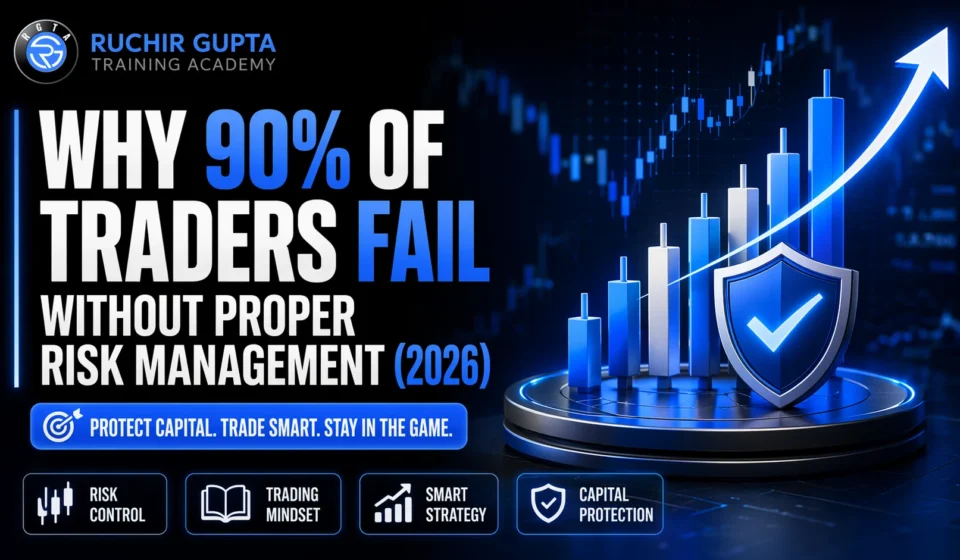

Risk Management: The Ultimate Guide to Protecting Your Money and Future
Introduction
Have you ever wondered why some people grow their money steadily while others lose it overnight? The answer often comes down to one simple idea: risk management.
Table Of Content
- Introduction
- What is Risk Management?
- Why Risk Management Matters
- Types of Risks You Should Know
- Key Principles of Risk Management
- Risk Management in Trading
- Common Mistakes in Risk Management
- Tools and Techniques for Managing Risk
- Role of Psychology in Risk Management
- Position Sizing Explained
- Stop Loss and Take Profit Strategies
- Diversification: Don’t Put All Eggs in One Basket
- Risk vs Reward Ratio
- How Online Stock Trading Courses Help
- Future of Risk Management
- Conclusion
- FAQs
Think of risk management like wearing a seatbelt. You don’t expect an accident every time you drive, but when something goes wrong, that small precaution can save you from disaster. Whether you’re managing your personal finances or diving into the stock market, understanding risk management can make all the difference between success and failure.
Learn risk management, risk management in trading, and online stock trading courses to protect profits and reduce losses effectively.
What is Risk Management?
Risk management is the process of identifying, analyzing, and controlling potential losses in any situation. It’s not about avoiding risk completely—that’s impossible. Instead, it’s about making smarter decisions so risks don’t destroy your finances.
For example, if you invest all your money in one stock, you’re taking a huge risk. But if you spread your investments, you reduce the chance of losing everything.
Why Risk Management Matters
Without risk management, even the smartest financial decisions can fail.
Here’s why it matters:
- Protects your capital
- Reduces emotional decision-making
- Helps you survive market volatility
- Builds long-term financial stability
Imagine building a house without a foundation—it may look good initially, but it won’t last. Risk management is that foundation.
Types of Risks You Should Know
Understanding risk is the first step to managing it.
Common types include:
- Market Risk: Prices going up or down unexpectedly
- Credit Risk: Borrowers failing to repay
- Liquidity Risk: Not being able to sell quickly
- Operational Risk: System or human errors
Each type requires a different approach, which is why learning about them is essential.
Key Principles of Risk Management
To manage risk effectively, you need to follow some basic principles:
- Identify risks early
- Measure potential impact
- Control or reduce exposure
- Monitor continuously
These principles act like a roadmap, guiding your decisions in uncertain situations.
Risk Management in Trading
Risk management in trading is especially important because markets are unpredictable.
If you’re trading stocks, forex, or crypto, even one bad trade can wipe out your account without proper planning.
Key practices include:
- Setting stop-loss orders
- Limiting capital per trade
- Avoiding overtrading
Professional traders don’t focus on winning every trade—they focus on managing losses.
Common Mistakes in Risk Management
Many beginners ignore risk until it’s too late.
Avoid these mistakes:
- Investing without a plan
- Risking too much on a single trade
- Ignoring stop losses
- Letting emotions drive decisions
A common trap is thinking, “This trade will definitely work.” The truth? Nothing is guaranteed.
Tools and Techniques for Managing Risk
Modern technology makes risk management easier than ever.
Popular tools include:
- Stop-loss orders
- Risk calculators
- Portfolio trackers
- Hedging strategies
These tools help you stay disciplined and avoid impulsive decisions.
Role of Psychology in Risk Management
Let’s be honest—money decisions are emotional.
Fear and greed are the two biggest enemies of good risk management.
- Fear makes you exit too early
- Greed makes you hold too long
Successful investors learn to control emotions and stick to their strategy, no matter what.
Position Sizing Explained
Position sizing determines how much money you invest in a single trade.
A simple rule many traders follow:
- Never risk more than 1-2% of your capital per trade
For example, if you have ₹1,00,000, you should risk only ₹1,000–₹2,000 per trade.
This ensures that even multiple losses won’t wipe you out.
Stop Loss and Take Profit Strategies
These are essential tools in risk management in trading.
- Stop Loss: Automatically exits a trade to limit losses
- Take Profit: Locks in profits when a target is reached
Think of them as guardrails on a highway—they keep you from going off track.
Diversification: Don’t Put All Eggs in One Basket
Diversification spreads your investments across different assets.
Examples include:
- Stocks from different sectors
- Mutual funds
- Bonds or commodities
If one investment fails, others can balance the loss.
Risk vs Reward Ratio
Every trade should have a clear risk-to-reward ratio.
For example:
- Risk ₹1 to earn ₹3
This means even if you lose more often, you can still be profitable overall.
Smart traders focus on high reward compared to risk, not just winning trades.
How Online Stock Trading Courses Help
If you’re serious about learning, online stock trading courses can be a game-changer.
They help you:
- Understand market behavior
- Learn technical and fundamental analysis
- Practice risk management strategies
- Build confidence before investing real money
Many beginners skip learning and jump straight into trading—which often leads to losses
Building a Personal Risk Management Plan
A good plan keeps you consistent and disciplined.
Steps to create your plan:
- Define your financial goals
- Decide your risk tolerance
- Set rules for trading or investing
- Track and review performance
Your plan should act like a personal rulebook you follow no matter what.
Future of Risk Management
With AI and technology evolving, risk management is becoming smarter.
Future trends include:
- AI-based trading tools
- Real-time risk analysis
- Automated portfolio management
But one thing won’t change—discipline will always be key.
Conclusion
At the end of the day, risk is unavoidable—but losing everything isn’t.
Risk management is what separates successful investors from those who struggle. Whether you’re managing personal finances or exploring risk management in trading, the goal is simple: protect your capital while growing it steadily.
Start small, stay consistent, and keep learning—especially through reliable resources like online stock trading courses. Because in the world of money, it’s not just about how much you earn—it’s about how much you keep.
FAQs
- What is risk management in simple terms?
Risk management is the process of reducing potential financial losses by making careful and planned decisions. - Why is risk management important in trading?
It helps traders limit losses, protect capital, and survive in unpredictable markets. - What is the 1% rule in trading?
It means risking only 1% of your total capital on a single trade to minimize losses. - Can beginners learn risk management easily?
Yes, especially with the help of online stock trading courses and consistent practice. - What are the best tools for risk management?
Stop-loss orders, position sizing, diversification, and risk-reward analysis are some of the most effective tools.