
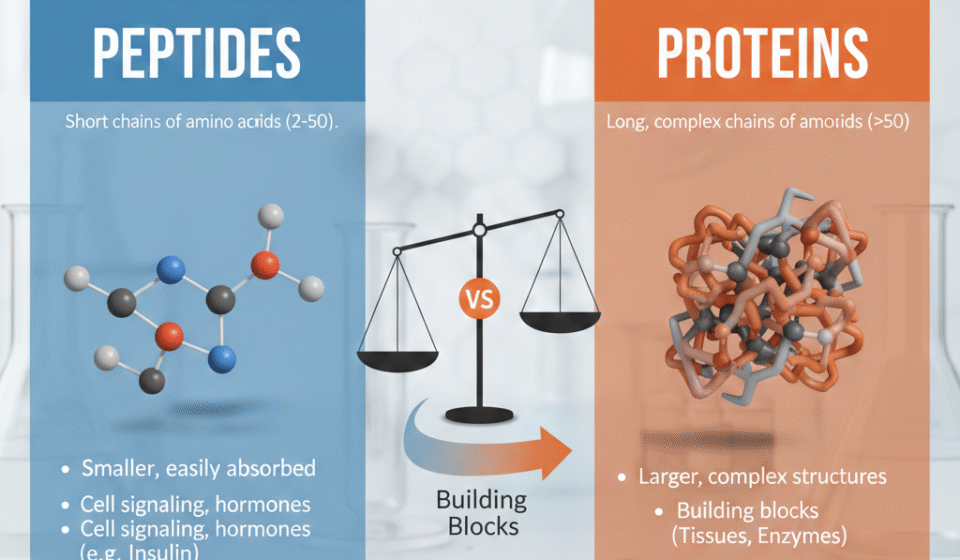

In the world of health, fitness, and wellness, the terms peptides and proteins are often used interchangeably. However, they are fundamentally different molecules, each playing a distinct role in the body. Understanding peptides vs. proteins is essential for anyone exploring supplements, research peptides, or wellness products like those featured on PeptideSaver.NET.
Table Of Content
This guide will explain the differences between peptides and proteins, their health benefits, and how to use this knowledge to make informed decisions about your wellness routine.
What Are Proteins?
Proteins are large, complex molecules composed of long chains of amino acids. They are essential for nearly every biological function, including:
-
Building and repairing tissues – muscles, skin, and organs
-
Enzyme production – facilitating biochemical reactions
-
Hormone production – regulating metabolism, growth, and other bodily functions
-
Immune function – antibodies are proteins that protect the body
-
Structural support – proteins like collagen maintain skin, hair, and joint health
Proteins are typically consumed through dietary sources, such as meat, dairy, eggs, legumes, and certain plant-based foods. They are broken down into amino acids during digestion, which the body then uses to build its own proteins.
What Are Peptides?
Peptides are short chains of amino acids, usually ranging from 2 to 50 amino acids, linked together by peptide bonds. Unlike proteins, peptides are smaller, simpler, and often easier for the body to absorb.
Key characteristics of peptides include:
-
Targeted biological activity – peptides often perform specific functions, such as hormone regulation, fat metabolism, or cognitive support
-
Rapid absorption – smaller size allows peptides to enter the bloodstream quickly, especially in nasal sprays or injections
-
Versatility in wellness applications – peptides are commonly used for muscle growth, fat loss, skin health, cognitive function, and hormone support
Popular peptides include Tesamorelin, Tirzepatide, Adamax Spray, and N Acetyl Semax Spray, many of which are listed and compared on platforms like PeptideSaver.NET.
Key Differences Between Peptides and Proteins
Understanding the differences between peptides and proteins helps users make informed wellness decisions:
| Feature | Peptides | Proteins |
|---|---|---|
| Size | Short chains of 2–50 amino acids | Long chains, hundreds of amino acids |
| Function | Targeted biological effects | Broad structural and functional roles |
| Absorption | Rapid, often via injections/sprays | Slower, must be digested into amino acids |
| Applications | Research, wellness, cognitive support, metabolism | Nutrition, tissue repair, enzyme/hormone production |
| Examples | Tesamorelin, Tirzepatide, Adamax Spray | Collagen, hemoglobin, insulin (as a protein hormone) |
In short, peptides are smaller, more targeted, and often used in research or wellness products, while proteins are larger and serve general structural and functional roles in the body.
Health Benefits of Peptides vs. Proteins
Peptides
Peptides are valued for their targeted effects, which can include:
-
Muscle growth and fat loss – peptides like Tesamorelin and Tirzepatide support lean mass development and metabolic function
-
Cognitive enhancement – nasal sprays like Adamax Spray and N Acetyl Semax Spray may help with focus and mental clarity
-
Skin, hair, and bone health – peptides like Klow or collagen-derived peptides improve elasticity, hair growth, and bone density
-
Hormonal regulation – some peptides influence growth hormone, testosterone, or metabolic pathways
Proteins
Proteins provide general and essential support for overall health:
-
Structural support – collagen, keratin, and elastin maintain tissue integrity
-
Immune function – antibodies are protein-based
-
Energy source – proteins can provide energy when carbohydrates and fats are insufficient
-
Enzymatic activity – enzymes regulate digestion, metabolism, and other biological reactions
While proteins offer broad benefits, peptides provide more specific, fast-acting effects, making them particularly attractive for targeted wellness interventions.
How PeptideSaver.NET Helps Users Navigate Peptides and Proteins
For those interested in peptides, PeptideSaver.NET is a vital resource. Here’s how it supports users:
-
Vendor Comparison
Compare prices and products from multiple verified peptide suppliers, ensuring you get authentic items. -
Product Reviews
Read real user experiences with peptides like Tesamorelin, Tirzepatide, or Adamax Spray, helping you make informed choices. -
Coupon and Discount Aggregation
Access promotions to save on high-quality peptide products. -
Trusted Verification
The platform pre-screens vendors to prevent scams or counterfeit products, ensuring that peptide bonds and formulation integrity are maintained.
Understanding peptides vs. proteins allows users to navigate PeptideSaver.NET effectively, selecting the right peptide for specific wellness goals while relying on proper dietary proteins for foundational health.
Practical Tips for Using Peptides and Proteins Together
-
Diet First
Consume high-quality protein from dietary sources to maintain overall health and support peptide function. -
Targeted Peptide Use
Use peptides for specific goals like cognitive support, metabolic enhancement, or skin/hair improvements. -
Combine Wisely
Some peptides enhance protein synthesis or fat metabolism, making them complementary to a protein-rich diet. -
Consult Professionals
Always discuss peptide usage with a healthcare provider, particularly if combining multiple products or addressing medical conditions.
Final Thoughts
Understanding peptides vs. proteins is crucial for anyone interested in health, fitness, or wellness products. While proteins provide essential structural and functional support, peptides offer targeted, fast-acting effects for muscle growth, cognitive enhancement, metabolism, and skin health.
Platforms like peptidesaver.net empower users to make informed decisions by offering verified vendors, price comparisons, and real user reviews for peptides. By combining proper dietary proteins with strategic peptide use, individuals can optimize both foundational health and targeted wellness outcomes.
Whether you’re exploring peptides for the first time or enhancing a well-established routine, knowing the distinction between peptides and proteins is the first step toward safe, effective, and informed wellness decisions.